
Understanding Night Behaviour in Cats
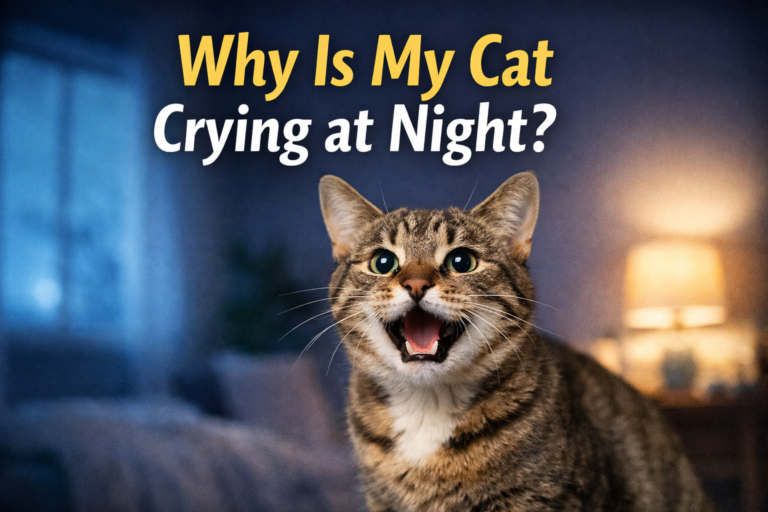
If you’ve ever wondered why is my cat crying at night, you’re not alone. Cats are naturally more active during the evening and early morning, which can lead to behaviour like cat meowing at night or even loud crying. This does not always mean something is wrong.
According to feline behavior studies and veterinary experts, cats are crepuscular animals, meaning they are most active at dawn and dusk. This natural rhythm often explains why your cat becomes vocal when you are trying to sleep.
In many cases, cat crying at night is simply linked to instinct, boredom, or a need for attention. From real-world observations of indoor cats, lack of daytime stimulation is one of the most common triggers for nighttime vocalisation.
Understanding this natural behavior is the first step in solving the problem and improving your cat’s sleep routine.
Types of Night Crying
Not all cat crying at night sounds are the same. Different vocal patterns can point to different needs or issues.
Soft cat meowing at night usually indicates mild needs such as hunger, attention, or comfort. On the other hand, loud or repeated cat yowling at night can signal stress, confusion, or possible medical discomfort.
Veterinary professionals often categorise cat vocalisation based on tone, duration, and frequency to help identify underlying causes. If you notice your cat crying at night all of a sudden, it is important to observe any changes in behavior, environment, or routine.
In many cases, sudden vocalisation is the first sign that something in your cat’s environment or health has changed.
Behavioural Causes of Night Crying
One of the most common reasons behind why is my cat crying at night is behavior-related issues. Cats are intelligent animals, and their habits often reflect their daily environment.
1. Attention Seeking
If your cat learns that crying gets attention, food, or interaction, it may continue this behavior.
2. Boredom
Indoor cats especially suffer from lack of stimulation, leading to cat meowing at night due to unused energy.
3. Loneliness
Cats may feel isolated at night, especially if they are used to human interaction during the day.
4. Routine Dependence
Cats thrive on routine. Any disruption can trigger cat crying at night all of a sudden.
Behavioural experts emphasize that reinforcing unwanted vocal behavior (like feeding or petting at night) can unintentionally increase the problem over time.
Environmental Triggers
Sometimes the reason behind why is my cat crying at night is not emotional but environmental.
Changes in surroundings can confuse or stress cats, leading to vocal behavior.
Common triggers include:
- Moving to a new home
- Introduction of new pets
- Loud noises outside
- Changes in feeding schedule
- New furniture or room arrangement
Feline stress research shows that even small environmental changes can significantly impact a cat’s sense of security.
If your cat crying at night started after a change in environment, this is likely the main cause.
Why Is My Cat Crying at Night All of a Sudden?
Sudden changes in behavior are often more concerning than long-term habits. If your cat crying at night all of a sudden, it may indicate:
- Stress or anxiety
- Pain or discomfort
- Sudden environmental change
- Early signs of illness
Veterinarians strongly advise monitoring sudden vocal changes, as they can sometimes be the earliest indicator of underlying health issues.
If the behavior continues for more than a few nights, it’s important to investigate further or consult a vet.
Medical Causes of Night Crying
Sometimes why is my cat crying at night is not behavioural at all but medical. Certain conditions can cause discomfort, confusion, or increased vocalisation.
Hyperthyroidism
Hyperthyroidism can increase energy levels and cause restlessness, leading to nighttime vocalisation.
Cognitive Decline
Cognitive Dysfunction Syndrome often affects older cats, causing confusion and night crying.
Urinary Issues
Urinary Tract Infection can cause pain and frequent meowing, especially at night.
Veterinarians recommend checking for medical causes if behavioural changes are sudden, persistent, or accompanied by appetite or litter box changes.
If your cat meowing at night becomes painful or unusual, a medical check is necessary.
Age-Based Behaviour Differences
Age plays a major role in nighttime vocalisation.
Kittens
Young cats may cry due to separation anxiety or hunger.
Adult Cats
Behavioural issues or boredom are common reasons for cat meowing at night.
Senior Cats
Older cats often suffer from confusion, hearing loss, or cognitive decline, leading to increased cat yowling at night.
Veterinary studies show that senior cats are significantly more likely to develop nighttime vocalisation due to cognitive changes.
How to Stop Cat Crying at Night (Step-by-Step Plan)
If you are struggling with why is my cat crying at night, the good news is that most cases can be managed.
1: Identify the Cause
Observe whether it is behavioural, environmental, or medical.
2: Improve Daily Activity
Play with your cat during the day to reduce nighttime energy.
3: Adjust Feeding Schedule
Feed your cat before bedtime to prevent hunger-related crying
4: Ignore Attention Crying
Do not respond to unnecessary cat meowing at night, as this reinforces behavior.
Step 5: Create a Calm Sleep Environment
Reduce noise and provide a comfortable sleeping area.
Animal behavior specialists emphasize consistency as the key factor in correcting nighttime vocal habits.
Proven Night Routine for Cats
A structured routine can significantly reduce cat crying at night.
- Play session before bedtime
- Final meal at night
- Calm environment with low light
- Comfortable sleeping space
Research in feline behavior shows that structured routines reduce stress and improve sleep quality in domestic cats.
What NOT to Do
Many cat owners unintentionally make the problem worse.
Avoid:
- Feeding every time your cat cries
- Punishing your cat
- Ignoring possible health symptoms
- Changing routines too frequently
Experts warn that inconsistent responses often reinforce unwanted behaviours instead of correcting them.
When to See a Vet
If your cat crying at night is persistent or worsening, professional help is needed.
Seek veterinary attention if you notice:
- Loss of appetite
- Weight changes
- Constant loud yowling
- Signs of pain or distress
FAQs
Why is my cat crying at night suddenly?
It may be due to stress, illness, or environmental changes.
Should I ignore my cat crying at night?
Only ignore attention-seeking behavior, not signs of distress.
Why is my senior cat crying at night?
Senior cats often experience cognitive decline or confusion.
Final Thoughts
If you are constantly wondering why is my cat crying at night, remember that every case has a cause. It could be behavioural, environmental, or medical.
With proper observation, routine changes, and veterinary guidance when needed, most cats can be helped to sleep peacefully through the night.