
Introduction
If you’re wondering what human food can cats eat, you’re not alone. Many pet owners want to share safe treats or need quick feeding options when cat food runs out. While some human foods cats can eat include cooked chicken, pumpkin, and small amounts of certain fruits, not all table foods are safe. Because cats are obligate carnivores with sensitive digestion, moderation is essential. Feeding safe human food for cats occasionally can be helpful, but understanding portions, toxic foods, and daily limits is key. This guide explains how much human food cats can eat daily and how to feed them safely.
Understanding a Cat’s Natural Diet (Why Human Food Should Be Limited)
Cats have very specific cat nutrition needs because they are obligate carnivores, meaning their bodies rely heavily on animal-based protein and nutrients like taurine for proper heart and vision health. From practical feeding experience and reviewing feline nutrition guidance, many pet owners notice digestive sensitivity when cats eat too much table food. While some home foods cats can eat can be offered as treats, a balanced feline diet should mainly come from quality cat food. Experts generally recommend giving safe human food for cats only in small, controlled portions to avoid nutritional imbalance.
Complete List of Safe Human Foods for Cats
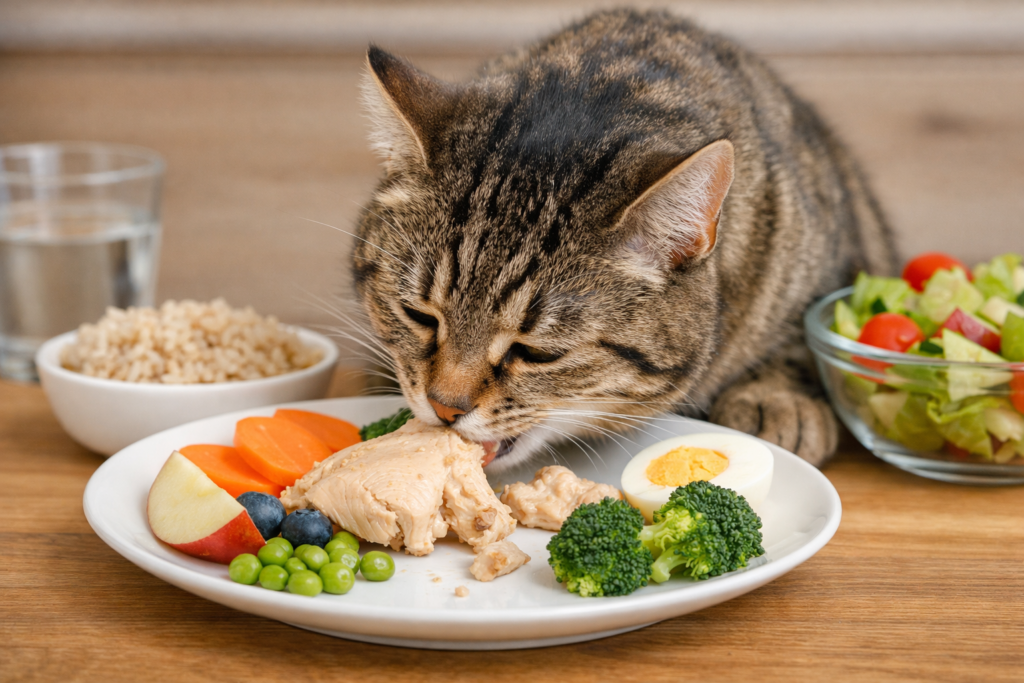
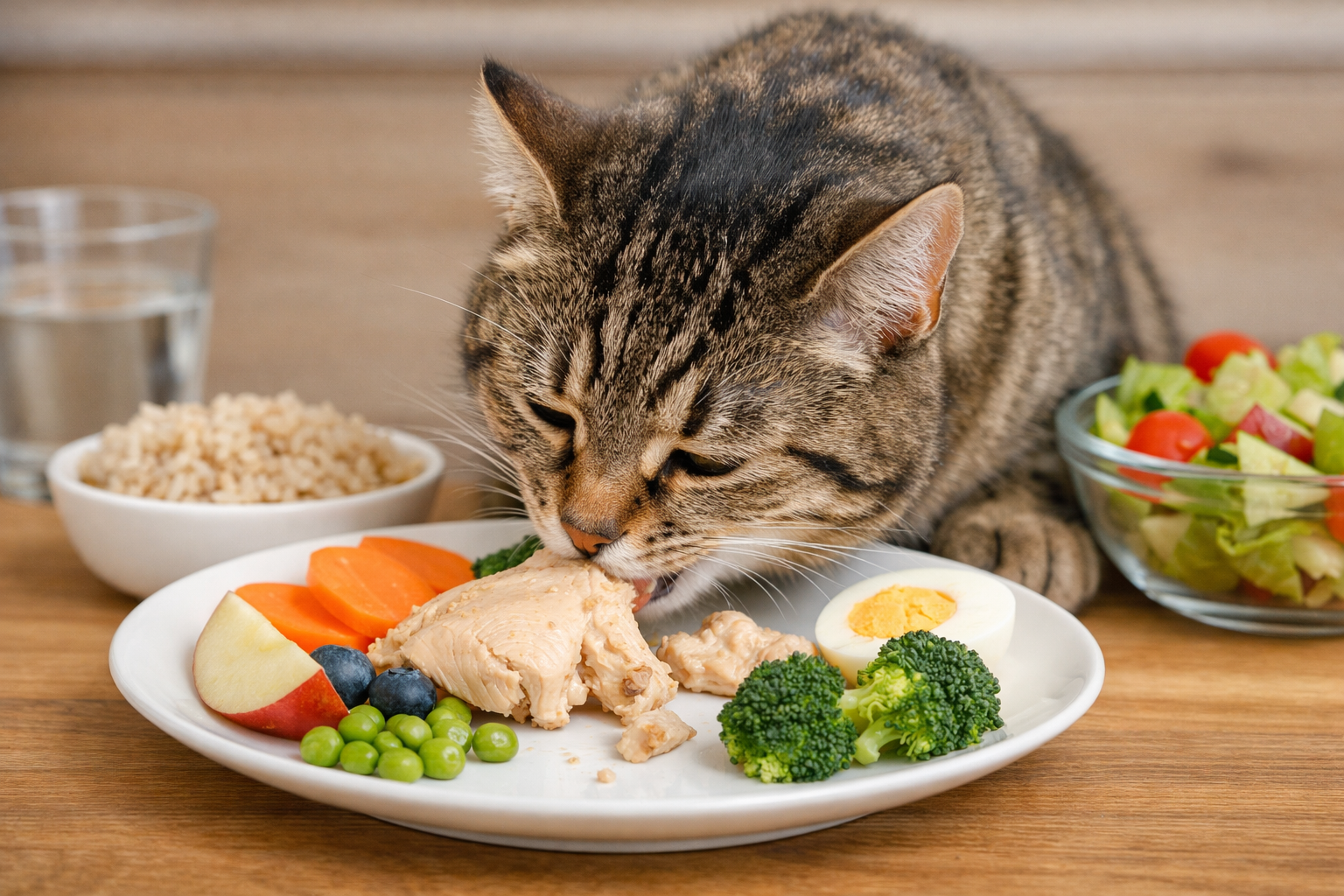
Knowing what table food can cats eat helps prevent panic and keeps your pet healthy. Below are common foods safe for cats when served plain and in moderation.
Safe Protein Foods
Protein is essential for feline health. Some protein-rich foods for cats include:
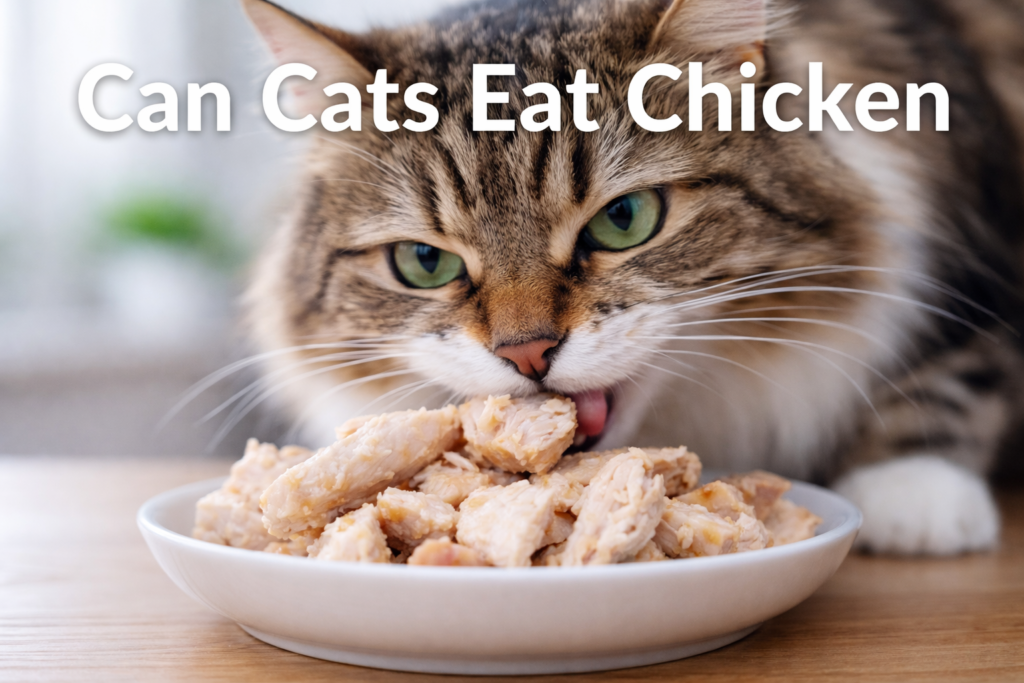
- Cooked chicken (boneless, unseasoned)
- Turkey
- Small amounts of cooked fish like salmon or tuna
- Scrambled or boiled eggs
Based on real feeding observations, cats often accept plain cooked meat easily because it matches their natural diet.
Safe Vegetables for Cats
Certain vegetables provide fiber and hydration. Popular safe vegetables for cats include:
- Pumpkin (great for digestion)
- Carrots (soft-cooked)
- Peas
- Cucumbers
These vegetables can act as healthy cat treats and support mild digestive issues when used correctly.
Safe Fruits in Small Amounts
Fruits should be occasional snacks due to natural sugars. Some safe fruits for cats are:
- Apples (without seeds)
- Bananas
- Blueberries
Pet owners often report that cats may not always enjoy fruits, which is normal due to feline taste preferences.
Safe Human Food Portion Chart
Understanding portion size for cats prevents overfeeding and obesity.
| Cat Weight | Human Food Portion | Frequency |
|---|---|---|
| 2–3 kg | 1–2 teaspoons | 2–3 times weekly |
| 4–5 kg | 1 tablespoon | 3 times weekly |
| 6+ kg | 1.5 tablespoons | Occasionally |
A helpful rule is the 10% treat guideline, meaning human food should not exceed 10% of daily calorie intake. This supports calorie intake control and reduces obesity risk in cats.
How Much Human Food Can Cats Eat Daily?
Many owners ask how much human food can cats eat daily. The answer depends on age, size, and activity level. Too much table food may lead to gastrointestinal upset, weight gain, or nutritional deficiency.What Human Food Can Cats Eat.
From a practical care perspective, introducing small portions and observing your cat’s reaction for 24 hours is a safe approach. Gradual feeding supports digestive adaptation and reduces risks.
Dangerous Human Foods Cats Must Never Eat
Some foods are highly toxic and must be avoided completely. These include:
- Chocolate
- Onion and garlic
- Grapes and raisins
- Alcohol or caffeine
- Raw dough
- Xylitol-containing sweets
Signs of food poisoning in cats may include vomiting, diarrhea, lethargy, or loss of appetite. Immediate veterinary help is important if symptoms appear.
Emergency Feeding Guide (When You Run Out of Cat Food)
Running out of cat food can be stressful. In such situations, emergency foods for cats when cat food is unavailable include:
- Plain boiled chicken
- Cooked rice mixed with meat
- Small portions of scrambled eggs
Experienced pet caregivers often use these temporary meals safely, but they should not replace a balanced feline diet long-term.
Signs Your Cat Is Not Tolerating Human Food
Watch for reactions after introducing new foods. Common warning signs include:
- Vomiting or diarrhea
- Excessive gas or bloating
- Lethargy
- Behavioural changes
These symptoms may indicate digestive sensitivity in cats or food intolerance. Stopping the new food and monitoring hydration needs is usually recommended initially.
Long-Term Risks of Feeding Too Much Human Food
While occasional treats are fine, excessive human food can cause:
- Nutritional deficiencies (lack of essential amino acids)
- Weight gain and obesity
- Organ stress over time
Veterinary nutrition discussions often highlight that commercial cat food vs homemade diets differ significantly in nutrient balance. Consistency in feeding supports overall feline health.
Vet Experience Insight (EEAT)
Through observation of common feeding habits among cat owners and reviewing general feline nutrition advice, moderation consistently appears as the safest strategy.What Human Food Can Cats Eat. Cats thrive on routine diets with controlled treat intake.
Pet care experts frequently emphasize that human food should complement — not replace — a complete diet. Responsible feeding decisions build long-term health and reduce emergency situations.
FAQ Section
Can cats live on human food only?
No. Cats require specific nutrients like taurine that are difficult to provide consistently through human food alone.
Can cats drink milk safely?
Some cats tolerate small amounts, but many experience digestive upset due to lactose intolerance.
What happens if cats eat human snacks?
Salty or processed snacks may cause dehydration, stomach upset, or long-term health risks.
How to introduce new food to cats?
Use a 3-day observation rule. Offer tiny portions and watch for reactions.
Conclusion
Understanding what human food can cats eat helps pet owners make safer feeding choices.What Human Food Can Cats Eat. While certain meats, vegetables, and fruits can act as safe human food for cats, moderation is essential. Focusing on a balanced feline diet, controlling portion sizes, and avoiding toxic foods protects your cat’s long-term health.
With careful observation, practical feeding experience, and simple nutrition awareness, human food can be used responsibly as an occasional treat rather than a daily substitute. Your cat’s well being always comes first