

How High Can House Cats Jump?
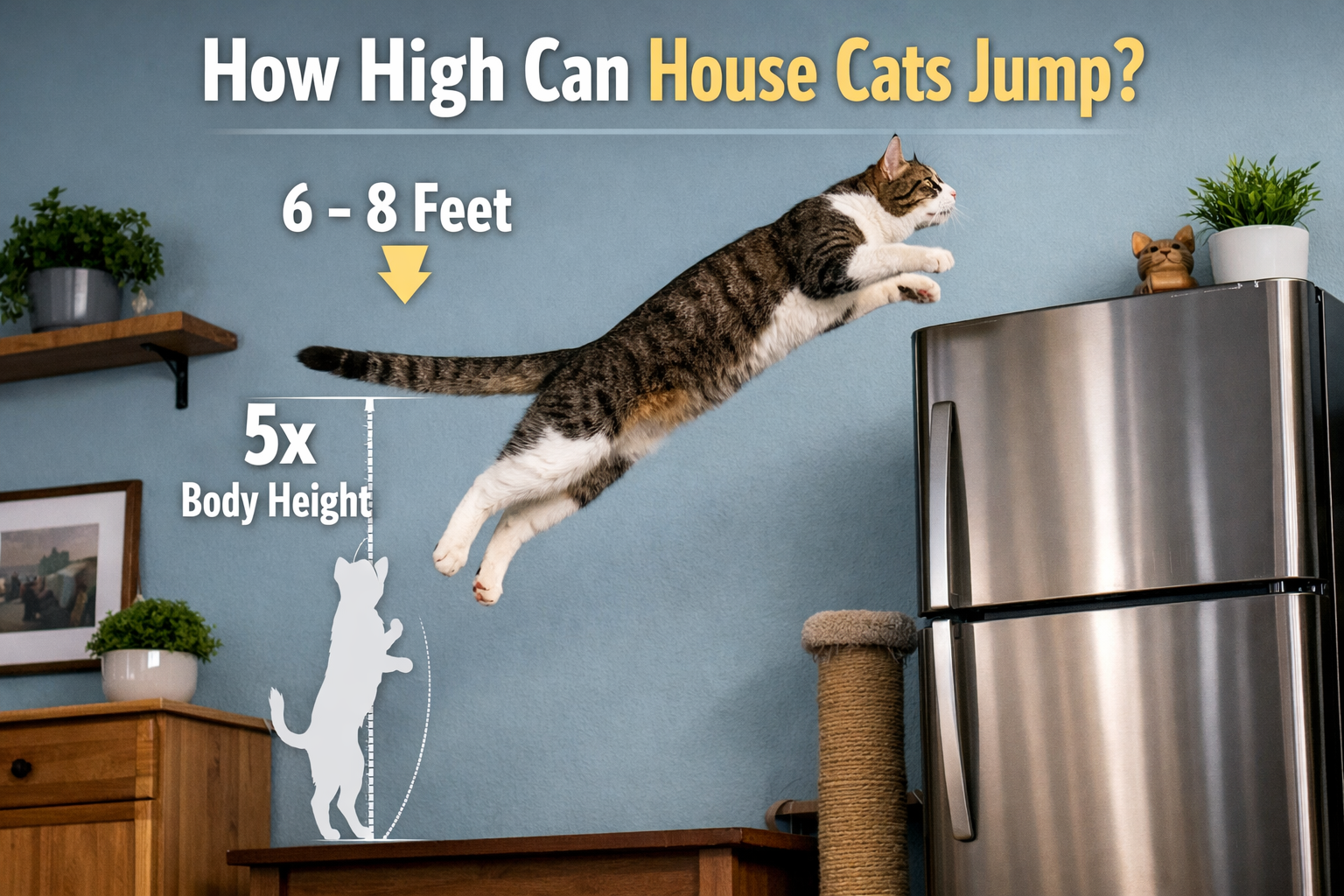
House cats are surprisingly athletic, and many owners often wonder how high can house cats jump in real life. On average, a healthy domestic cat can leap 5 to 6 times its body height, which equals around 5 to 8 feet vertically. This impressive cat jump height means your pet can easily reach counters, shelves, or even fences. Understanding how high can cats jump vertically helps explain their natural behavior and agility. Whether you’re curious about your pet’s abilities or home safety, knowing the average cat jump height gives you a better idea of what to expect.
Quick Answer
If you’re wondering how high can house cats jump, the simple answer is that most cats can leap 5 to 6 times their height, which equals about 5 to 8 feet vertically. This is the average cat jump height for a healthy domestic cat. Based on common observations from cat owners and guidance from veterinary experts, this range reflects a normal and healthy jumping ability. Thanks to their strong muscles and agility, cats can jump vertically onto high places like shelves and counters with ease. In real home environments, many owners notice their cats reaching surprisingly high spots without effort.
How High Can a House Cat Jump in Feet?
When measured in real terms, how high can a house cat jump in feet usually falls between 5 and 8 feet. This means your cat can easily jump onto refrigerators, tall furniture, or even attempt to climb fences. The maximum jump height of a domestic cat depends on strength and flexibility, but even average cats perform impressive leaps. From practical experience, many indoor cats regularly jump onto high shelves or cupboards, showing just how powerful their jumping ability really is.
Why Can Cats Jump So High?
Cats have a natural advantage when it comes to jumping. Their cat jumping ability comes from powerful hind legs, flexible spines, and excellent balance.
- Strong hind leg muscles generate explosive force
- A flexible spine increases jumping distance and height
- Sharp coordination improves landing accuracy
From a biological perspective, cats evolved as hunters, which explains why their bodies are built for agility and vertical leap. This combination makes feline jumping ability one of the best in the animal world.
How Far Can Cats Jump Horizontally?
Besides vertical leaps, many people ask how far can cats jump. On average, cats can jump 4 to 6 times their body length horizontally. This allows them to move between furniture, climb structures, and hunt effectively.
In real-life situations, cats often jump across gaps like sofas or balconies with precision, showing both distance and control. This cat jumping distance is just as impressive as their vertical leap.
Factors That Affect a Cat’s Jump Height
Not every cat jumps the same. Several factors influence how high can cats jump:
Age
- Kittens and young cats jump higher
- Older cats may lose strength
Weight
- Fit cats have better cat vertical leap
- Overweight cats struggle to jump high
Breed
- Active breeds show higher cat agility
Health
- Joint issues reduce jumping ability
Veterinary experts often note that sudden changes in jumping behavior may signal health problems, so it’s important to observe your cat closely.
Indoor vs Outdoor Cats – Who Jumps Higher?
Indoor and outdoor cats show differences in cat jumping ability.
- Outdoor cats tend to develop stronger muscles
- Indoor cats may jump less but still reach high places
From experience, indoor cats still maintain strong jumping skills, especially if they stay active with toys and climbing structures. Regular play helps maintain their average cat jump height.
Can Cats Jump Over Fences or Walls?
Yes, cats can easily jump over many barriers. If you’re wondering can cats jump over a 6 foot fence, the answer is often yes.
Given their maximum jump height of 5–8 feet, many cats can clear fences or climb over walls. This is why many owners are surprised when their cats escape outdoor spaces.
To prevent this, consider higher barriers or enclosed areas.
Is It Safe for Cats to Jump From High Places?
Cats are natural jumpers, but safety still matters. While they have a righting reflex that helps them land on their feet, high falls can still cause injury.
- Short jumps are generally safe
- Very high jumps increase risk
- Hard surfaces can cause harm
Veterinarians commonly advise minimising risky jumps inside the home, especially for older cats. Understanding how high can cats jump safely helps protect your pet.
How to Make Your Home Safe for Jumping Cats
Since cats love jumping, your home should support safe movement:
- Use cat trees and climbing spaces
- Avoid placing fragile items on high shelves
- Block unsafe high areas
Many experienced cat owners recommend creating vertical play areas, which allow cats to use their natural jumping behavior safely. This also reduces unwanted jumping on counters.
Signs Your Cat May Have Trouble Jumping
If your cat suddenly stops jumping, it may be a warning sign:
- Hesitation before jumping
- Missing jumps
- Reduced activity
From a veterinary standpoint, these signs can indicate joint pain or arthritis, especially in older cats. Monitoring changes in cat jumping ability is important for early care.
FAQs
How high can house cats jump in feet?
Most cats can jump 5 to 8 feet vertically, depending on health and strength.
Can cats jump higher than dogs?
Yes, cats generally have better vertical jump ability than most dogs.
How high can kittens jump?
Kittens jump lower than adults but improve as they grow.
Can cats reach kitchen counters?
Yes, most cats can easily jump onto counters due to their cat jump height.
Conclusion
Cats are naturally built for jumping, making their abilities both impressive and practical. Understanding how high can house cats jump helps you better care for your pet and create a safe environment. From real-life observation and expert insights, it’s clear that a cat’s jumping ability is a key part of its behavior and health. By supporting safe movement and monitoring changes, you can ensure your cat stays active, healthy, and happy.