
Understanding Why Cats Hate Liquid Medicine
If you’ve ever tried how to give cats liquid medicine, you already know it’s not easy. Cats are very sensitive to taste and smell, so liquid medication for cats often feels unpleasant to them. Most medicines taste bitter, which makes even calm cats resist. Fear is another big factor cats don’t like being held or forced into something they don’t understand. This is why many owners struggle to find the best way to give liquid medicine to cats. Understanding this behavior helps you stay patient and choose a safer, more effective approach.
Before You Begin: 5 Mistakes Cat Owners Make
Before learning how to give cats liquid medicine, avoid common mistakes. Many owners rush the process, making liquid medication for cats stressful. Incorrect syringe placement can cause choking or rejection. Skipping preparation like calming your cat leads to failure. Not rewarding your cat also makes future attempts harder.
Veterinary professionals emphasize that preparation and calm handling significantly increase success when medicating cats.
To find the best way to give liquid medicine to cats, always stay patient, gentle, and prepared.
Best Way to Give Liquid Medicine to Cats
Now let’s go step-by-step on how to give cats liquid medicine safely.
Positioning Your Cat Safely
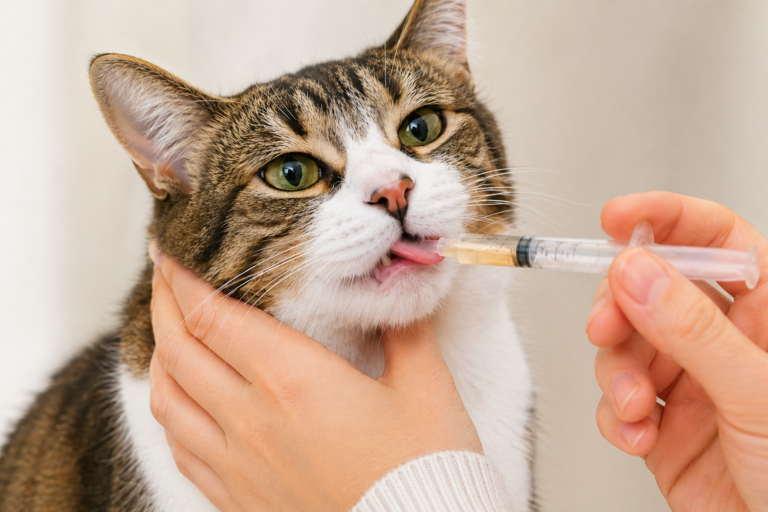
Place your cat on a stable surface or your lap. Wrap them gently in a towel if needed. This prevents scratching and keeps them secure.
Proper Syringe Technique
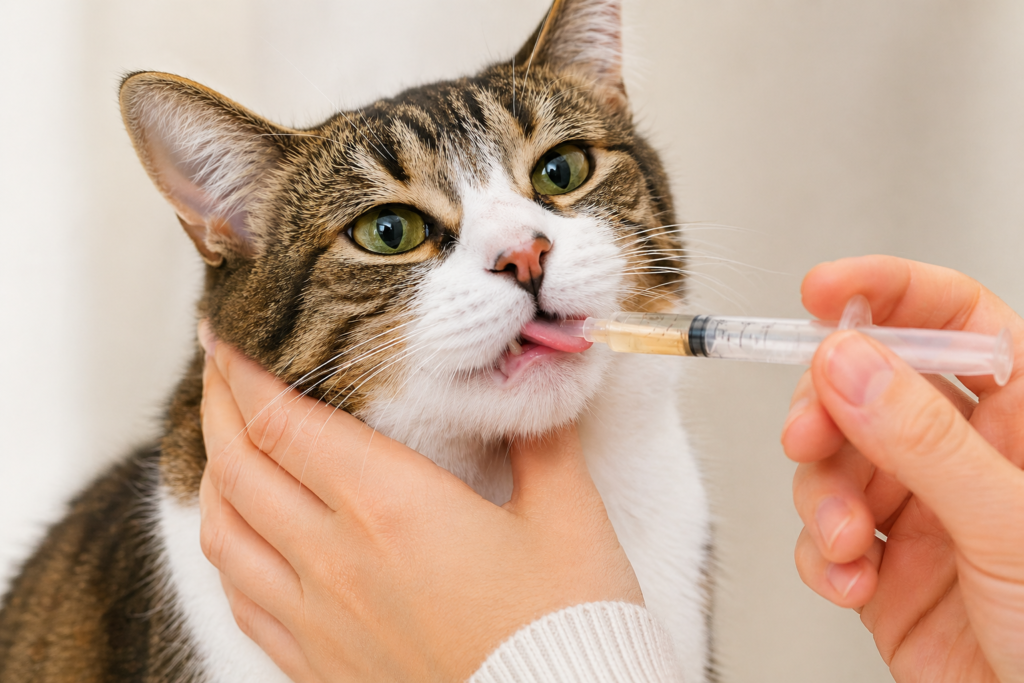
Hold the syringe and aim for the side of your cat’s mouth not straight down the throat.
Controlling the Head Gently
Tilt the head slightly upward, but don’t force it too far.
Delivering Medicine Effectively
Slowly release the medicine in small amounts. Let your cat swallow before continuing.
According to veterinary guidance, administering medicine slowly from the side of the mouth reduces choking risk and improves swallowing.
This is the best way to give liquid medicine to cats without causing fear or injury.
Vet-Recommended Techniques
When learning how to give cats liquid medicine, expert techniques make a huge difference.
- Use the cheek pocket instead of the throat
- Give medicine slowly in small doses
- Watch your cat after giving medication
Experienced veterinarians recommend using calm, controlled movements and observing your cat for a few minutes after dosing to ensure safety.
These small adjustments improve how your cat reacts to liquid medication for cats and make future doses easier.
Different Methods Based on Cat Personality
Not every cat is the same, so your approach should change.
Calm Cats
These cats are easier to handle. You can follow basic steps of how to give cats liquid medicine with minimal restraint.
Scared Cats
Use a quiet room and gentle handling. Avoid sudden movements.
Aggressive Cats
Wrap them securely and consider asking for help.
Senior or Sick Cats
Be extra gentle and slow, as they are more sensitive.
Pet care experts highlight that adjusting your technique based on your cat’s personality increases success and reduces stress.
When Cats Refuse: Real Solutions That Work
Sometimes, even after learning how to give cats liquid medicine, your cat refuses.
Here are solutions:
- Mix medicine with food (only if vet-approved)
- Use flavoured medication options
- Try smaller doses over time
Always consult a veterinarian before mixing liquid medication for cats with food, as some medicines lose effectiveness.
Finding the best way to give liquid medicine to cats often requires trial and patience.
How to Give Liquid Medicine Without Getting Scratched
Scratches are a common problem when figuring out how to give cats liquid medicine.
Tips to stay safe:
- Use a towel wrap (cat burrito method)
- Keep your hands away from claws
- Stay calm to avoid triggering aggression
Animal care professionals recommend minimising restraint pressure while maintaining control to prevent defensive reactions.
This keeps both you and your cat safe during medication.
Can You Mix Liquid Medication With Food or Water?
Many owners ask this when learning how to give cats liquid medicine.
- Yes, but only if your vet approves
- Some medicines lose effectiveness when mixed
- Cats may refuse food if they detect the taste
Veterinary advice is crucial here, as not all liquid medication for cats is safe to mix with food or water.
This method can work but isn’t always the best way to give liquid medicine to cats.
Emergency Situations to Watch For
While practising how to give cats liquid medicine, watch for warning signs:
- Coughing or choking
- Medicine coming out of the nose
- Extreme foaming
If your cat shows breathing difficulty or severe reactions, seek immediate veterinary care.
These signs may indicate improper administration of liquid medication for cats.
How to Tell If Your Cat Actually Swallowed the Medicine
A common concern when learning how to give cats liquid medicine is whether your cat swallowed it.
Signs they did:
- Licking lips
- Normal breathing
- No spitting
If your cat spits it out, you may need to try again carefully.
Experts recommend observing your cat closely after dosing to confirm successful swallowing.
Long-Term Strategy: Training Your Cat to Accept Medicine
Training can make how to give cats liquid medicine much easier over time.
- Reward your cat after each dose
- Create a routine
- Stay consistent
Behavioural experts suggest positive reinforcement as the most effective way to reduce resistance in cats.
This turns a stressful task into a manageable routine.
Tools That Make Giving Medicine Easier
Using the right tools improves success with liquid medication for cats:
- Oral syringes
- Towels for wrapping
- Treats for rewards
These tools support the best way to give liquid medicine to cats and reduce struggle.
FAQ Section
What if my cat spits out medicine?
Try again slowly and use the side-mouth method.
Can cats taste medicine?
Yes, cats are very sensitive to taste, which is why they resist.
Can I skip a dose if it fails?
Always consult your veterinarian before skipping doses.
What if my cat foams after medicine?
This can happen due to taste, but severe reactions need vet attention.
Conclusion: The Stress-Free Approach Every Cat Owner Should Follow
Learning how to give cats liquid medicine takes patience, practice, and the right approach. By understanding your cat’s behavior, avoiding common mistakes, and using safe techniques, you can make the process easier. The best way to give liquid medicine to cats is always gentle, slow, and stress-free.
With proper care, expert-backed methods, and consistency, even the most difficult cats can learn to accept medication safely.