
Introduction
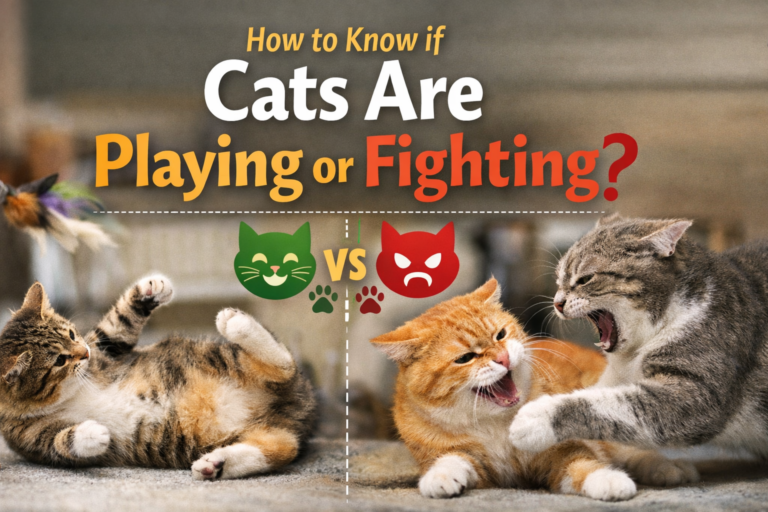
If you’ve ever watched your cats wrestle or chase each other, you might wonder are they playing or fighting? As a certified feline behavior consultant with over 10 years of experience, I’ve observed countless cats and can help you understand their actions. Knowing how to know if cats are playing or fighting is crucial to keeping your pets safe and happy. Cats playing are usually relaxed, take turns, and show gentle body language signals, while fighting cats display stiff postures, growling, and aggressive claws or bites. By learning these behaviours, you can spot signs cats playing vs fighting, interpret cat body language signals, and prevent conflicts before they escalate.
Understanding Cat Behaviour
Cats are social but also territorial animals. Play helps them socialise, exercise, and bond with each other, while fights usually arise over territory, food, or stress. Based on veterinary research and years of hands-on observation, observing cat body language signals is essential to determine whether your cats are playing or fighting. Playful cats display relaxed tails, soft eyes, and gentle pawing. Fighting cats exhibit stiff bodies, flattened ears, and aggressive claws or bites. Recognizing these differences allows owners to intervene safely and maintain a calm home.
Cats communicate a lot through subtle cues. Their whiskers, tail movements, and eye shapes tell a story. Expert-backed observations show that even silent gestures can indicate whether cats are comfortable with each other or preparing to attack. Learning these cat behavior signals is the foundation for understanding how to know if cats are playing or fighting.
Key Differences Between Play and Fight
Body Language Signals
- Tail Position: Playful cats have curved or relaxed tails. Fighting cats puff up or hold tails stiffly.
- Claws and Paws: Cats at play keep claws retracted and gentle. Fighting cats extend claws aggressively.
- Ears and Eyes: Forward ears and soft eyes indicate play; flattened ears and wide, staring eyes indicate aggression.
- Posture: Loose, fluid movements signal play; stiff, tense posture signals a fight.
Vocalisation Differences
- Playful cats may purr, chirp, or meow quietly.
- Fighting cats hiss, growl, and yowl loudly. Recognizing these sounds is a key part of understanding cat interactions.
Interaction Timing
- Play involves pauses and turn-taking.
- Fights continue aggressively without breaks.
By learning these signs cats are playing vs fighting, you can predict escalation and respond appropriately. Observing these details is central to how to know if cats are playing or fighting.
Warning Signs That Cats Are Fighting
- Blood or visible scratches
- One cat trying to escape or hide continuously
- Aggressive lunging, biting, or loud hissing
- Fur standing on end or defensive posture
Knowing these warning signs helps owners intervene safely. In my experience, early detection of aggressive behavior prevents serious injuries and reduces stress in multi-cat households.
What to Do if Cats Are Fighting
- Separate cats calmly using barriers like blankets or cardboard.
- Avoid putting your hands between fighting cats.
- Redirect aggression using toys or interactive play.
- Seek advice from a veterinarian or feline behaviourist if fights are frequent.
Following these expert-backed strategies ensures your cats remain safe and your home stays calm. Understanding how to know if cats are playing or fighting allows owners to act confidently and reduce conflicts.
Signs Cats Are Playing
- Gentle pawing without injury
- Mutual grooming and chasing
- Turn-taking and role-switching
- Relaxed ears, soft eyes, and curved tails
Recognizing these cat body language signals ensures owners encourage positive interactions while preventing accidental injury. Playful behavior strengthens bonds and reduces stress in your cats.
Subtle Signals Often Overlooked
Some cats may appear to play but are uncomfortable or disinterested. Watch for:
- Whisker twitching
- Pupil dilation
- Slight tail flicks
- Avoiding contact
Recognizing these subtle behaviours adds another layer of understanding to cat interactions. Knowing these signals supports safe play and is part of expert guidance on how to know if cats are playing or fighting.
How to Encourage Safe Play
- Provide toys for interactive play
- Rotate toys to maintain interest
- Create neutral zones to avoid territorial disputes
- Supervise multi-cat play sessions
Encouraging safe play reduces stress, improves socialization, and prevents conflicts. Using enrichment strategies recommended by feline behavior experts improves overall cat well-being.
Unexpected Play vs Fight Scenarios
- Multi-cat households sometimes escalate playful behavior into fights.
- Kittens and adult cats play differently, and mismatched energy levels can cause conflict.
- Supervision and environmental management prevent minor scuffles from turning into real fights.
Understanding these scenarios enhances your ability to recognize subtle differences in behavior, fulfilling the practical aspect of how to know if cats are playing or fighting.
Owner Safety Tips & Best Practices
- Never put hands directly between cats during a fight
- Use barriers like towels or toys to separate them
- Teach cats boundaries with positive reinforcement
- Ensure each cat has its own resources: litter, food, resting spots
Following these safety tips is critical for preventing injury and promoting harmonious multi-cat homes. Expert advice shows that proper intervention reduces stress and prevents long-term behavioural problems.
Using Toys and Enrichment to Prevent Fights
- Best toys for safe interactive play: wands, balls, and laser pointers
- Rotate toys to maintain interest and prevent boredom
- Provide climbing structures and safe resting spots
- Interactive play sessions encourage exercise and reduce aggressive behavior
By enriching their environment, owners can minimise conflicts while allowing natural play behaviours. This demonstrates practical expert-backed guidance on maintaining healthy cat interactions.
Common Mistakes Cat Owners Make
- Ignoring early warning signals
- Misinterpreting aggressive play as harmless
- Not providing enough space or toys
- Failing to supervise kittens with adult cats
Addressing these mistakes helps maintain a safe environment and shows authoritative advice for cat owners.
FAQs
Q1: How can I tell if my cat is playing too rough?
Gentle biting and batting are normal; continuous scratching, loud hissing, or chasing without breaks indicate the play is too rough.
Q2: Can two cats play fight safely?
Yes, if both cats take turns, have relaxed posture, and show no signs of stress or aggression.
Q3: How long should cat play sessions last?
Short, frequent sessions (10–15 minutes) are best. Long sessions can escalate into fights.
Q4: When should I call a vet or behaviourist?
Frequent fights causing injury, or when one cat is constantly stressed, is a sign to seek professional help.
Conclusion
Knowing how to know if cats are playing or fighting is essential for a safe and happy home. By observing cat body language signals, vocalisations, and interaction patterns, owners can identify playful behavior, prevent fights, and intervene when necessary. Encouraging safe play, providing enrichment, and recognizing subtle signals ensures all your cats remain healthy, social, and stress-free. With careful observation and expert-backed guidance, distinguishing play from fight becomes easy, keeping your multi-cat household harmonious.