

Introduction
Many cat owners eventually ask the question cat male or female how to tell At first glance, male and female cats can look very similar, which makes cat gender identification confusing especially for new pet owners or people caring for kittens. Learning how to tell if a cat is male or female is important for understanding your pet’s behavior, health needs, and future care, such as spaying or neutering. While male vs female cats share many traits, there are clear physical clues that help identify their gender. In this guide, you’ll learn the easiest way to identify cat gender, including tips for how to tell if a kitten is male or female safely and accurately.Cat Male or Female How to Tell
Why It’s Important to Know if Your Cat Is Male or Female
Knowing how to tell if a cat is male or female helps you care for your pet properly. Male vs female cats can show different behaviour and health needs. For example, female cats may go into heat, while male cats may roam or spray to mark territory. Veterinarians and feline behavior experts often recommend identifying a cat’s gender early so owners can plan for proper care, including spaying or neutering. From a pet-care perspective, understanding these cat gender differences helps owners prevent unwanted litters and support their cat’s long-term health and well-being.
The Easiest Way to Tell if a Cat Is Male or Female
The easiest way to tell if a cat is male or female is by checking the area under the tail. This method helps with accurate cat gender identification for both kittens and adult cats.
Checking Under the Tail
To identify male vs female cat anatomy, gently lift the cat’s tail and observe the openings underneath. Pet care specialists advise holding the cat calmly and keeping the inspection quick to avoid stress.
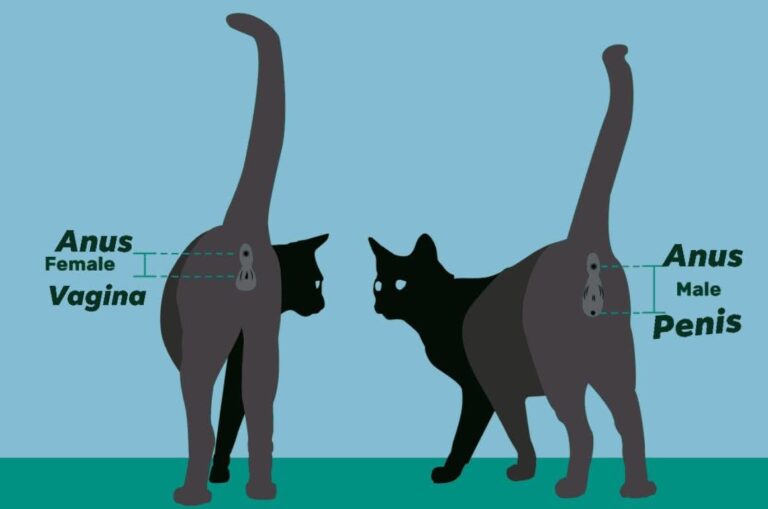
Distance Between Anus and Genital Opening
One of the most reliable ways of determining the sex of a cat is by looking at the spacing.
Male cats have a larger gap between the anus and penis.
Female cats have a much shorter distance between the anus and vulva.
This difference in cat genital distance makes it easier to determine gender.
Shape of the Genitals
The punctuation mark method is often used for sexing kittens.
Male cats resemble a colon
Female cats resemble an exclamation mark
Many breeders and veterinarians use this visual technique when identifying kitten gender.
Male vs Female Cat Anatomy Explained
Understanding male vs female cat anatomy makes cat gender identification easier.
Male Cat Genitalia
Male cats have:
A visible penis
Testicles inside the scrotum
Larger spacing between openings
As male kittens grow, their testicles become easier to see or feel.
Female Cat Genitalia
Female cats have:
A vulva instead of a penis
Shorter spacing between openings
A vertical slit shape
Experienced veterinarians confirm that these anatomical differences are the most reliable way to determine a cat’s sex.
How to Tell if a Kitten Is Male or Female
Identifying kitten gender can be difficult because their anatomy is still developing.
Age When Gender Becomes Visible
Newborn kittens often look very similar, making sexing kittens under two weeks challenging. By about 4–6 weeks, gender differences become clearer.
The Punctuation Method for Kittens
This method is commonly used to identify male vs female kittens.
Female kitten → upside-down exclamation mark
Male kitten → colon shape
Signs of Male Kittens
Larger spacing between openings
Small lumps that later develop into testicles
Signs of Female Kittens
Shorter spacing between openings
Vertical slit below the anus
- Cat Male or Female How to Tell
Professional breeders frequently rely on these signs when determining kitten gender.
Physical Differences Between Male and Female Cats
Besides genital anatomy, there are physical differences between male and female cats.
Body Size Differences
Generally, male cats tend to be larger and heavier than female cats. However, breed and nutrition can also influence size.
Face Shape and Cheeks
Intact male cats often develop larger cheeks and broader faces, especially after puberty.
Mammary Glands and Nipples
Female cats that have had kittens may show enlarged mammary glands because of nursing.
Veterinary professionals note that physical traits alone cannot always confirm gender but can offer helpful clues.
Coat Colours That Reveal a Cat’s Gender
Some coat colours are linked to cat genetics and gender differences.
Calico Cats
Almost all calico cats are female due to X-chromosome genetics.
Tortoiseshell Cats
Like calico cats, tortoiseshell cats are usually female.
Orange or Ginger Cats
Many orange or ginger cats are male, although females can have this colour too.
Genetics Behind Cat Coat Colours
Animal genetics research shows that coat colour patterns such as calico require two X chromosomes, which is why they appear mostly in female cats.Cat Male or Female How to Tell
Behavioural Differences Between Male and Female Cats
Some male vs female cat behavior differences are influenced by hormones.
Male Cat Behaviour
Male cats may:
Roam more
Display territorial behavior
Spray urine to mark territory
- Cat Male or Female How to Tell
Female Cat Behaviour
Female cats may:
Go into heat cycles
Become more vocal during mating season
However, feline behavior experts emphasis that personality varies greatly between individual cats.
Differences Between Neutered and Intact Cats
Spaying or neutering can reduce many gender-based behaviour.
Neutered male cats are less likely to roam or spray.
Spayed female cats no longer go into heat.
Veterinarians strongly recommend spaying and neutering because it improves overall feline health and helps control pet populations.
Common Mistakes When Identifying Cat Gender
Many people make mistakes when trying to tell if a cat is male or female.
Common mistakes include:
Checking kittens that are too young
Confusing genital shapes
Relying only on coat colour
Assuming gender based on behavior
- Cat Male or Female How to Tell
Pet care professionals recommend checking multiple physical signs to avoid misidentifying cat gender.
When to Ask a Veterinarian
If you are unsure about cat gender identification, it is best to consult a professional.
Veterinarians are trained to examine feline anatomy and can quickly determine whether a cat is male or female. This is especially helpful for newborn kittens or neutered cats, where physical differences may be harder to notice.
Quick Cat Gender Identification Checklist
Use this simple checklist when trying to identify cat gender:
Look under the tail
Check spacing between openings
Observe genital shape
Look for testicles in male cats
Consider coat colour clues
Following these steps can help you quickly determine whether your cat is male or female.
Conclusion
Learning how to tell if a cat is male or female is an important skill for any cat owner. By checking the distance and shape of the genital openings, observing physical traits, and understanding behavior differences, you can usually identify your cat’s gender with confidence. Remember that kitten gender identification may take time, as young kittens develop gradually. If you are ever unsure, a veterinarian can easily confirm your cat’s sex and provide guidance for proper care. With the right knowledge, you can ensure your cat stays healthy, happy, and well cared for